News
Cookeville Regional Medical Center Leaders Tell Washington What 340B Means for Rural Tennessee
In an interview with the American Hospital Association, CRMC’s CEO and pharmacy director explained how a federal drug discount program funds cancer care, free insulin, and a record number of baby deliveries — and why losing it would be devastating.
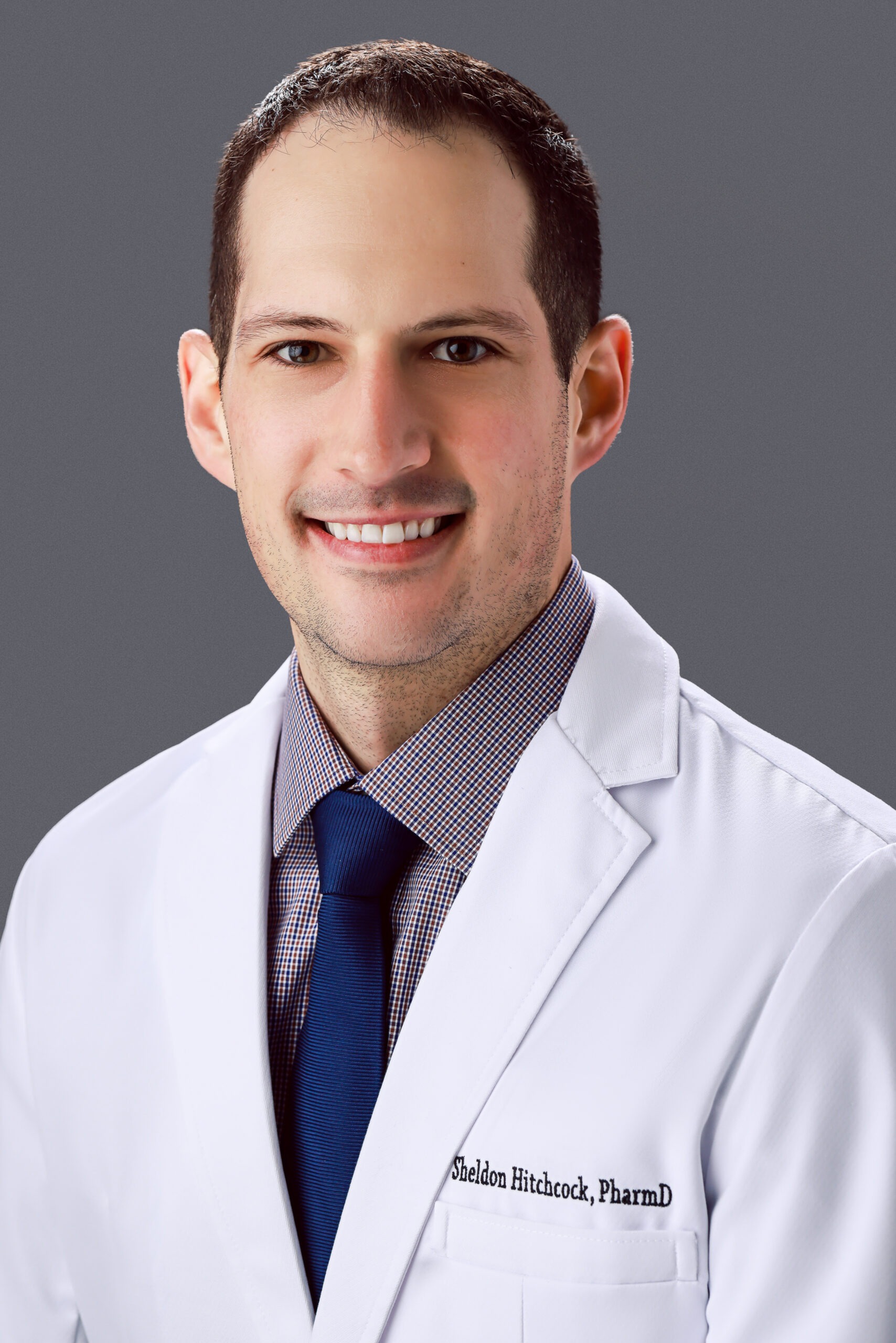
When the American Hospital Association wanted to explain what the 340B Drug Pricing Program means for rural communities, it turned to Cookeville. In a recent interview, CRMC Chief Executive Officer Buffy Key and Director of Pharmacy Sheldon Hitchcock laid out in plain terms what the program makes possible here and what would be lost without it.
The 340B program allows eligible hospitals to purchase certain outpatient medications at a discount directly from pharmaceutical companies. For CRMC, the largest hospital between Nashville and Knoxville, those savings amount to $16.9 million a year, reinvested entirely back into care for the region’s most vulnerable patients.
“340B has been a godsend for us,” Key said. “It helps us remove financial barriers that would otherwise delay or prevent patients from accessing treatment.”
Key has spent her career in this region. A Jamestown native, she worked her way from medical laboratory scientist to CEO, serving at CRMC and Vanderbilt before returning to lead the hospital she grew up depending on. She knows what it means when a patient in Overton or Pickett County has nowhere else to go.
“We serve a large rural population across 14 counties,” she said. “Many of our patients travel significant distances just to reach us, and a substantial number are uninsured or underinsured. The 340B program is what allows us to meet them where they are.”
Sheldon Hitchcock, Director of Pharmacy at CRMC, added, “In 2025 alone, we saved patients $2 million in drug costs. Many of those medications were provided at absolutely no cost to the patient.”
Hitchcock oversees the specialty pharmacy program that has become one of the most direct expressions of what 340B savings can accomplish. CRMC used a portion of those savings to build a dedicated patient assistance team: one pharmacist and six pharmacy technicians whose sole focus is medication affordability.
“We help patients navigate insurance authorizations, manufacturer assistance programs, grant applications, whatever it takes to make sure they can actually afford their medications,” Hitchcock said.
That work extends to patients managing chronic conditions, diabetes, hypertension, heart disease, who face ongoing, expensive medication regimens.
“We see patients who simply won’t fill their prescriptions at full cost,” Hitchcock said. “They’ll ration insulin. They’ll skip doses. The 340B program lets us address that directly.”
The program also underwrites services that would be difficult to sustain in a rural hospital operating on thin margins. CRMC is home to the only cancer center in the region. “Without 340B savings, we would be unable to provide the level of cancer care we currently provide,” Key said. “For our patients, that would mean driving to Nashville or Knoxville — or going without.”
The AHA invited Key and Hitchcock to speak because CRMC’s experience mirrors that of hundreds of rural safety-net hospitals nationwide, all of which face the same threat as drug manufacturers and Congress weigh the program’s future.
340B savings have also helped keep labor and delivery, gastroenterology, and cardiovascular services running locally. The women’s center delivered a record 2,050 newborns in 2025. “These are service lines that are expensive to run,” Key said. “In a rural region, if we can’t sustain them, there is no alternative for our patients. They go without.”
Both Key and Hitchcock described a program under increasing pressure. Drug manufacturers have imposed new restrictions on how 340B discounts can be accessed, and CRMC was forced to end its contract pharmacy partnerships with local pharmacies, a change that made it harder for patients to pick up discounted medications near their homes.
“The administrative burden has grown significantly,” Hitchcock said. “Manufacturers are making it harder and harder to access the discounts the program is supposed to provide. Our team spends enormous time navigating those restrictions, time that would be better spent on patients.”
Key added, “Most 340B hospitals, including us, operate on margins below five percent. This program isn’t a luxury. Any further cuts would be devastating, not just for us, but for the 350,000 people we serve.”
Key, who serves as an at-large delegate to the AHA’s Regional Policy Board, said she hoped the interview would help national policymakers understand what is at stake in communities like Cookeville. “We are not an edge case,” she said. “We are exactly who this program was designed for.”
The published case study can be found here: Cookeville Regional Medical Center | Tennessee | AHA.